Your Guide to Custom Dental Crowns in Oxnard CA
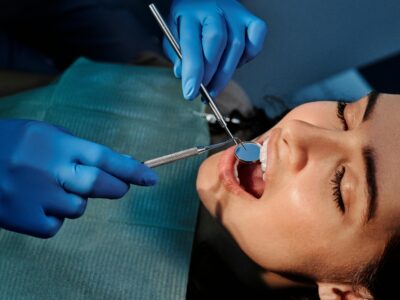
A custom dental crown is one of those treatments people often hear about long before they need one. Then a filling cracks, a root canal leaves a tooth fragile, or years of grinding wear a molar down to the point where simple patchwork no longer makes sense. At that point, the value of a well-made crown becomes very real. It is not just about covering a tooth. It is about restoring strength, protecting what remains, and giving you something that feels dependable when you chew, smile, and talk.
For patients looking into Dental Crowns Oxnard CA, the biggest questions usually sound simple on the surface. Do I really need one? What kind should I get? How long will it last? Will it look natural? Those are fair questions, and the answers depend on the condition of the tooth, the forces it handles every day, your bite, your habits, and even whether you tend to clench under stress without realizing it.
Crowns are common, but good crown work is never generic. The best results come from careful planning, solid materials, and a dentist who pays attention to fit, bite, gum contour, and appearance as a whole rather than treating the crown like a one-size-fits-all cap.
What a custom dental crown actually does
A crown is a full-coverage restoration that fits over a prepared tooth, almost like a tailored shell. It rebuilds shape, size, and strength when the original tooth can no longer safely do the job on its own. That may happen after a large cavity, a fracture, a root canal, severe wear, or replacement of an old failing restoration.
The word “custom” matters. Teeth are not interchangeable pieces. A crown for a lower molar that takes heavy chewing force should not be designed the same way as a crown for an upper front tooth where color, translucency, and light reflection matter most. Even two crowns on neighboring teeth may need different contours to match the bite and gumline correctly.
In practice, the goal is to make the crown feel unremarkable in the best sense. You should not constantly notice it. It should let you chew comfortably, floss normally, and smile without seeing a mismatch in color or shape. When patients say, “It feels like my own tooth again,” that is usually the mark of a crown that was planned and adjusted well.
When a crown makes more sense than a filling
Dentists do not place crowns just because a tooth has a cavity. Many teeth do well with bonded fillings for years. The decision shifts when a filling would leave too little healthy tooth structure behind, or when cracks and force patterns make breakage likely.
A back tooth with a very large old silver filling is a classic example. On an X-ray and in the chair, that tooth may still look usable, but the remaining cusps can be thin and unsupported. Patients sometimes want “just one more filling” because it sounds less involved and less expensive. Sometimes that is reasonable. Sometimes it sets the tooth up for a much bigger break six months later, often right before a vacation or holiday.
Teeth that have had root canal treatment are another common situation. Once a tooth has been treated internally, it often becomes more vulnerable to fracture over time, especially in the back of the mouth. A crown does not make a dead tooth alive again, but it can make it far more durable.
There are also cosmetic cases. A crown can improve shape, close visual asymmetry, or restore a tooth that is badly discolored and structurally compromised. In those situations, the dentist should be conservative and clear about alternatives. Veneers, bonding, or whitening may be better choices when the tooth is otherwise healthy.
Why “custom” is not a marketing word
Patients sometimes assume every crown is custom by definition. Technically, each one is made for a specific tooth, but the quality of that customization can vary a great deal.
A truly custom crown accounts for how the tooth meets its opposite partner, how it contacts neighboring teeth, how the gum tissue frames it, and how your smile line exposes the area. The dentist also has to think about what happens when your jaw moves side to side and forward, not just when you bite straight down.
That matters because a crown can fit well enough to cement in, yet still create problems if those details are overlooked. A crown that is a little too high can leave a patient sore after chewing for days. One with poor contact to the adjacent tooth may trap food constantly. One that ignores the gum contour may look bulky near the gumline and be harder to keep clean.
In aesthetic areas, custom work is even more noticeable. Front teeth are not flat white blocks. Natural enamel has depth, variation, and light transmission. A crown that is too opaque can look dull and artificial under daylight, even if the color seems fine under the operatory lamp.
Materials and how dentists choose between them
There is no single “best” crown material for every case. Each option involves trade-offs between strength, esthetics, thickness requirements, and wear characteristics.
Porcelain fused to metal crowns have been around for a long time and can still work well in certain cases. They are durable, but they may show a dark line near the gum over time, and they usually do not mimic natural enamel as beautifully as newer all-ceramic options.
All-ceramic and porcelain crowns are popular for visible teeth because they can produce excellent esthetics. They can blend especially well for front teeth when the shade, translucency, and contour are done carefully.
Zirconia crowns have become common because they are strong and versatile. In the back of the mouth, where chewing pressure is higher, zirconia can be a smart choice. That said, “zirconia” is not one uniform thing. Different formulations vary in strength and translucency. Some are built for maximum durability, some for improved appearance.
Gold or high noble metal crowns remain outstanding from a purely functional standpoint, especially for back molars. They are kind to opposing teeth, precise at the margins, and very long lasting. Many patients simply do not want the metallic appearance, which is understandable. Still, from a mechanical perspective, they deserve respect.
A practical way to think about crown materials is this:
- Front teeth usually prioritize esthetics first, with strength still important.
- Back teeth often prioritize strength and fit because they absorb more force.
- Heavy grinders need materials and designs that account for repeated stress.
- Patients with very limited space between the teeth may need a material that performs well at thinner dimensions.
- The best material on paper can still fail if the bite is wrong or the tooth underneath is poorly prepared.
What the process usually looks like
In many Oxnard practices, a crown is completed in either two visits or one longer visit, depending on the technology used and the case itself. Both approaches can be appropriate.
With the traditional method, the dentist numbs the tooth, removes decay or old restorative material, shapes the tooth, and takes an impression or digital scan. A temporary crown is then placed while the final one is fabricated by a lab. At the second visit, the temporary comes off, the final crown is tried in, adjusted, and cemented.
With same-day digital systems, the dentist can sometimes scan, design, mill, and place the crown in a single appointment. That can be convenient, especially for busy patients who want to avoid wearing a temporary. However, same-day does not automatically mean better. Some cases benefit from a skilled laboratory technician, particularly when color matching or complex bite considerations are involved.
From a patient’s perspective, the preparation appointment is usually the more involved one. The final cementation visit is often shorter, though it still matters greatly. This is when bite and contact checks need attention. If the dentist rushes through that stage, the crown may look fine and still feel wrong once the numbness wears off.
Temporary crowns deserve more respect than they get
Temporary crowns are easy to dismiss because they are, by definition, temporary. But they can tell you a lot. A well-shaped temporary helps protect the tooth, keeps neighboring teeth from drifting, and gives both patient and dentist a preview of the final form.
If a temporary feels painfully high, catches floss in a strange way, or irritates the gums, it is worth reporting. Those details can help guide refinement of the final crown. Too many patients assume they are supposed to “just deal with it” for a couple of weeks. Minor discomfort can be normal. Persistent bite pain, food trapping, or a temporary that keeps coming loose should not be ignored.
The same goes for front teeth. If a temporary crown looks too long, too square, or out of harmony with the smile, speak up. It is easier to tweak expectations before the final crown is cemented than after.
How long do crowns last in real life?
Patients understandably want a number. In real life, crowns can last well over a decade, and some last much longer. Others fail earlier because of decay at the margin, fracture, heavy clenching, poor oral hygiene, or changes in the tooth underneath.
What shortens crown life most often is not dramatic failure, but slow neglect. A crown cannot get a cavity, but the tooth under the edge certainly can. If plaque sits at the margin day after day, decay can develop where the crown meets the tooth. That is one reason excellent crown work can still fail in a mouth that is hard to keep clean.
Grinding is another major factor. I have seen back crowns crack in patients who swore they did not clench, only to learn from a spouse that they grind loudly at night. In those cases, a night guard is not an accessory. It is part of protecting the investment.
Fit matters more than many patients realize
A crown can be attractive and still be poorly fitted. Marginal fit, contact strength, and bite harmony are not glamorous topics, but they strongly influence whether the crown feels comfortable and stays healthy over time.
Marginal fit refers to how closely the edge of the crown meets the prepared tooth. If the margin is rough, open, or overextended, it can trap plaque and irritate gum tissue. Contacts with neighboring teeth need a specific balance. Too loose, and food packs between the teeth. Too tight, and floss shreds or will not pass comfortably.
Bite is where many callbacks happen. If a crown hits too hard before the surrounding teeth do, the patient may notice tenderness when biting, temperature sensitivity, jaw soreness, or a sense that the tooth feels “taller.” Sometimes the issue is obvious right away. Sometimes it only shows up once the numbness wears off and the patient tries a normal meal.
That is why a careful dentist checks the bite in more than one position and listens when patients describe what feels off. Fine adjustments can make a remarkable difference.
Appearance, shade matching, and front tooth reality
Crowns for front teeth live under harsher scrutiny than molars, often from the patient more than anyone else. Tiny differences in length, surface texture, translucency, and line angles become obvious when a person smiles in bright light or sees a close-up phone photo.
A single front crown can be the hardest one to match because it has to blend with a natural neighbor that may have slight color shifts, tiny translucency at the edge, or character marks developed over years. Perfect duplication is challenging even with good materials. The best cosmetic results usually come from strong communication, high-quality photographs, detailed shade selection, and a lab that knows how to build natural character rather than a flat generic white.
Patients sometimes request the brightest shade possible for one front crown while leaving adjacent teeth unchanged. That can create the “one piano key” look. In those cases, an honest discussion is better than simply delivering what was asked for. Whitening first, then matching the crown to the new baseline, often produces a more harmonious result.
Cost, value, and what affects the fee
Crown fees vary from office to office. Material choice, technology, lab quality, complexity of the case, and regional overhead all play a role. A crown in Oxnard may also involve related costs such as X-rays, buildup material, core reinforcement, or root canal treatment if the tooth needs more than a crown alone.
Price matters, but value in crown dentistry is rarely about finding the lowest number. A cheaper crown that traps food, chips early, or needs replacement soon is not the better bargain. On the other hand, the highest fee does not automatically guarantee the best outcome either. Patients do well when they ask what the fee includes, what material is recommended and why, whether a custom lab is involved, and what happens if the bite needs adjustment after placement.
Insurance can help, though it often covers only a portion and may have waiting periods, frequency limitations, or downgraded benefits based on material. It is wise to verify the estimate, but also wise to understand that insurance decisions are financial policies, not clinical judgments.
Questions worth asking before you commit
Patients do not need to become dental experts overnight, but a few well-aimed questions can reveal a lot about how thoughtfully the case is being handled.
You might ask whether the tooth could reasonably be restored another way, what material is best for your specific tooth, whether signs of grinding affect the plan, how the temporary will be managed if you are getting a lab-made crown, and what sort of follow-up is expected if the bite feels off after cementation. Clear answers tend to signal a clinician who has thought through the case rather than defaulting to habit.
If the crown is for a front tooth, ask how shade matching is handled and whether photographs or custom lab communication will be used. If it is for a back tooth and you clench, ask whether a night guard should be part of the plan from the start.
Caring for a crown once it is in place
A crown does not demand exotic maintenance. It asks for consistency. Brush well at the gumline, floss daily, and keep routine dental visits. The weak point is usually the edge where crown meets tooth, not the visible chewing surface.
For patients who tend to chew ice, bite fingernails, tear packaging with their teeth, or snack constantly on sticky sweets, those habits matter more after crown placement, not less. A crown restores function, but it is still dentistry, not a natural untouched tooth.
If you wear a night guard, wear it. If your dentist tells you the crown feels solid but notices wear facets elsewhere in the mouth, pay attention. The crown may survive years of heavy function, but the surrounding teeth, the cement seal, and the opposing bite may suffer if the clenching pattern goes unmanaged.
Finding the right provider for Dental Crowns Oxnard CA
Choosing a provider is partly about credentials and partly about temperament. Crown dentistry rewards precision, patience, and communication. A dentist can be technically competent and still leave patients frustrated if concerns about shape, color, or bite are brushed aside.
Look for an office that explains the reasoning behind the recommendation, not just the fee. Pay attention to whether the dentist discusses alternatives, risks, and limitations in plain language. If the office treats every crown case as routine and interchangeable, that is a yellow flag. Good crown work is common, but never casual.
Reviews can be helpful when they mention specifics such as comfort, fit, how issues were handled, and whether the final result felt natural. Before and after photos can offer some insight too, especially for visible teeth. Still, the best sign is often the quality of the consultation itself. When a dentist studies your bite, asks about grinding, examines the condition of the tooth carefully, and explains the trade-offs among materials, you are more likely dealing with someone who values outcomes over speed.
When not to rush, and when not to wait
Some crown cases can wait a little while. Some should not. A small chip on a noncritical area may allow time for planning. A cracked tooth with sharp pain on biting or a large broken cusp is a different story. Delay in the second scenario can mean the difference between a straightforward crown and a tooth that splits badly enough to need extraction.
There is judgment involved here. Not every crack is an emergency. Not every large filling means imminent failure. But once a tooth starts giving repeated signs, tenderness when releasing a bite, a visible fracture line, pieces breaking away, or recurring decay under an old restoration, the clock is often moving in the wrong direction.
The best timing is usually before the tooth forces the issue. Preventive crown placement on the right tooth, at the right moment, can spare you from a more expensive and uncomfortable chain of events later.
A custom crown, done well, is one of the most practical restorations in dentistry. It can preserve a tooth for many years, restore reliable chewing, and blend naturally into your smile. For anyone researching Dental Crowns Oxnard CA, the key is not simply getting a crown. It is getting the right crown, for the right reason, Dental Crowns Oxnard CA with the right design, and from a provider who treats the details as the treatment, not as extras.
Omni Dental Specialty
1690 E Gonzales Rd
Oxnard, CA 93036, United States
Phone: +1 805-410-9603
FAQ About Dental Crowns Oxnard CA
What is the average cost of a crown in California?
The fee depends on the crown material, tooth condition and any additional treatment. Request an itemized estimate from Omni Dental Specialty after an examination, and confirm insurance benefits before scheduling.
How long do dental crowns last?
Longevity varies with the material, fit, oral hygiene and biting habits. Regular dental reviews help identify wear, damage or decay. A crown does not need replacement solely because it reaches a particular age.
Do teeth go bad under crowns?
Decay can develop in the remaining natural tooth, particularly near the crown margin. Brush with fluoride toothpaste, clean between teeth daily and keep dental appointments. Report new pain or looseness promptly.
Which crown is best for bruxism?
No material suits everyone. Your dentist assesses grinding, tooth position, bite forces and appearance before recommending a crown. A protective appliance may also be recommended to manage stress on the restoration.